
GHOST STORIES
WHY YOU MISSED ME LAST WEEK (or, more likely, didn’t)

If you’re among the infinitesimally tiny portion of humans on this planet who noticed I didn’t write my Substack last week, I’m here to tell you why: g-g-g-g-ghosts!
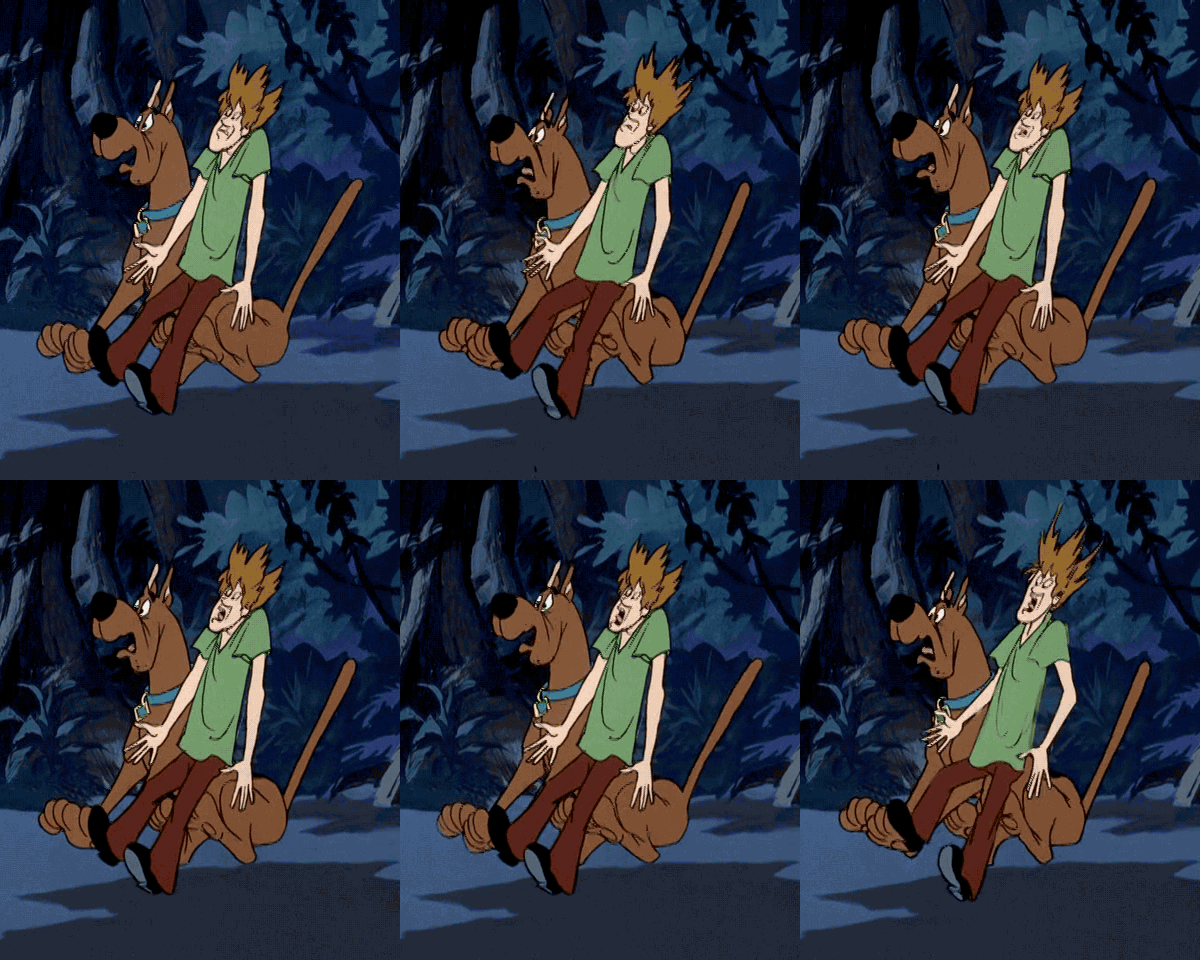
Ok, not the comical kind—unless, of course, you find the idea of ghosts nothing more than a plot for a sitcom.
But sure, let’s go ahead and start there, since one of my favorite TV shows while growing up in the sixties was exactly that, a sitcom based on a ghost.
The Ghost and Mrs. Muir debuted in Sept. 1968 on NBC, airing against My Three Sons on CBS and The Lawrence Welk Show on ABC. Ah, those simple times when instead of three hundred streaming channels to choose from we only had three.
Back then, if you didn’t like what your options were, you walked away from the screen and found something else to do, something that probably involved actual human contact, like have a conversation or play a board game. Stuff like that.
Heh. How quaint.
Now-a-days, the whole shtick of the entertainment industry is to snag a kid’s attention so incessantly that they never look away from a screen long enough to learn what it is to touch a tree—or better yet, climb one.
What a sorry and deprived childhood, to never have climbed a tree. But that’s a substack for a different day. And besides, I digress. So back to g-g-g-g-ghosts!
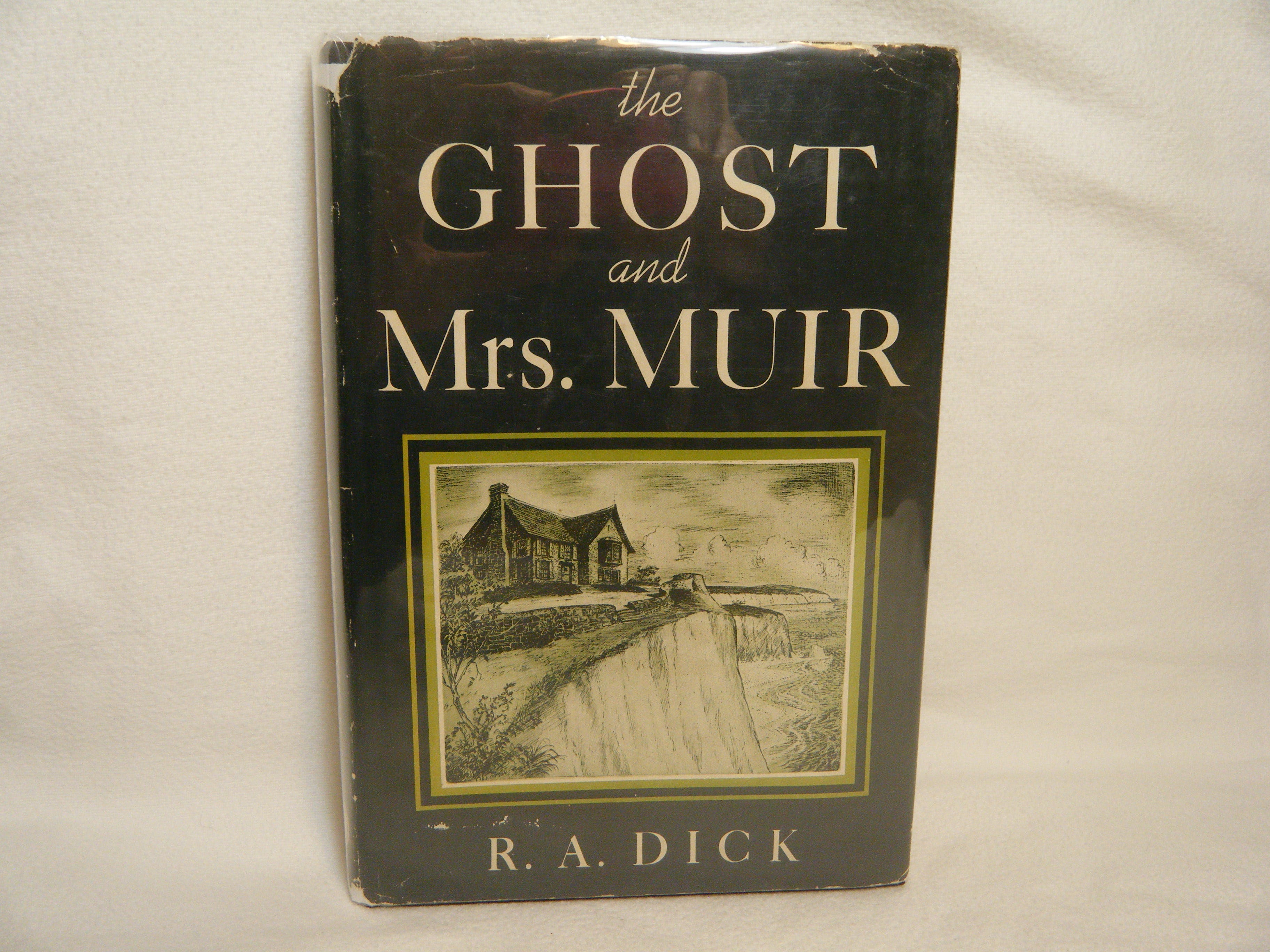
The television show, based on the 1947 movie of the same name starring Gene Tierney and Rex Harrison, was based in turn on the 1945 novel of the same name by Irish author, Josephine Leslie, writing as R.A. Dick.
Leslie took those initials and surname for her pseudonym from her father (Robert Abercromby Dick Rowley)—an actual sea captain who died the year she was born.
Her having the full name of Josephine Aimee Campbell Rowley Leslie, we can all understand the appeal of a simpler pen-name—especially when it came time to autograph those books. Women writers also had an easier time simply selling books when they were credited to a male- or neutral-sounding author.
Gee, thanks, patriarchy and misogyny, for all you do for society.
Anyway, I confess I’ve never read her works, but now that I’m mentioning her, I definitely plan to. And you know which one I’m starting with!
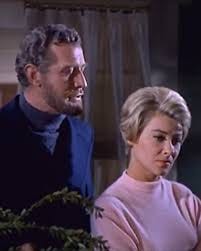
In the TV version, actress Hope Lange, as the widow, Mrs. Muir, won two consecutive Emmys, yet the show was cancelled at the end of its second season. Following just one season, NBC sold it to ABC, who moved the show to its Thursday night lineup as the lead-in to its already popular That Girl and Bewitched. But again, CBS gobbled up most of the ratings cookies with Family Affair.
Thanks to syndication, I can say with some measure of honesty that I’ve seen and enjoyed every episode of all the shows I’ve mentioned (with the exception of The Lawrence Welk Show), but as a ten-year-old in ’68 I was all-in for actor Edward Mulhare (who played the ghost, Captain Gregg).
My affection for him never faded—and maybe it’s even increased, now that I’m getting ever closer to an age where I’m likely to become a ghost, myself.
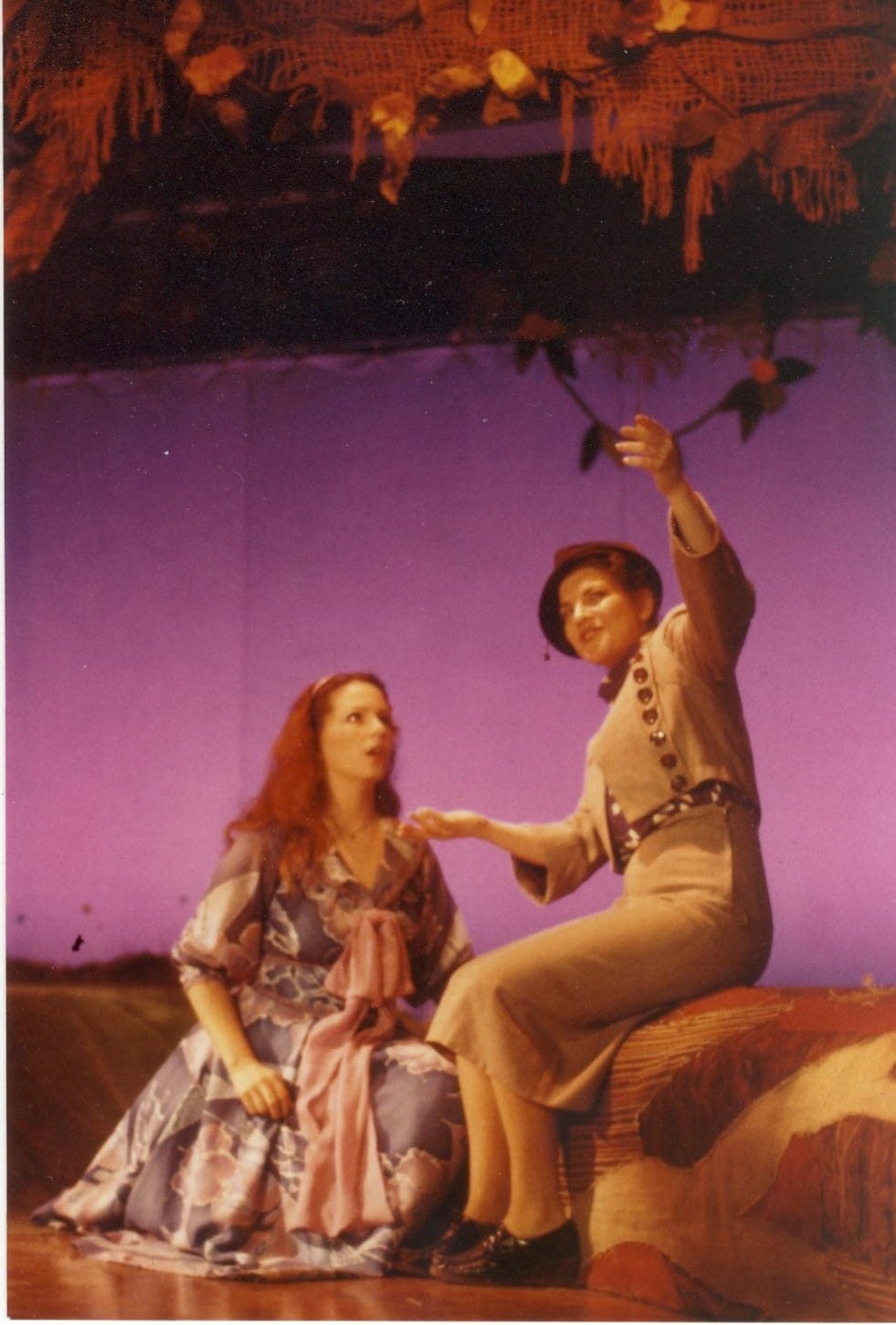
** The Enchanted is the English translation of a 1933 play by French dramatist, Jean Giraudoux, called Intermezzo, about a young school teacher who falls in love with a ghost. By now you can understand why I was so thrilled to land the role, and why it remains my favorite production I was ever cast in.
My favorite episode has always, shall we say, haunted me. If you’re also an aficionado of Edward Mulhare, chances are you’ll already know what I’m about to say.
The episode is The Ghost of Christmas Past, a loose re-telling of Scrooge that’s actually most memorable for its dream sequence culminating in a lip lock between the leads.
After all, the story is a paranormal romance—even if it’s couched in rather goofy comedic upholstery—and what consumer of paranormal romance in any of its forms doesn’t secretly long for that ghostly kiss, that “consummation devoutly to be wished,” as it were?
GROWING UP WITH GHOSTS
Our own family lore includes a haunting, though admittedly, one we concocted as kids. It was born of a found book bearing a scrolling 19th century inscription and a need to explain the many creaks and moans an eighty-year-old Victorian home is heir to.
There were a number of things left behind by previous owners when our parents bought the house on Broad Street in 1962, and several of them were books. It certainly didn’t constrain our ghostly imaginations to have moved in across the street from a mansion that at the time sat abandoned, its shutters sagging, its large, unkempt lawns encircled by a wrought iron fence.
The mansion, a former boys’ school known as Audubon Villa, was later bought and refurbished into a small retirement home, but at the time it appealed to us more like 1313 Mockingbird Lane.
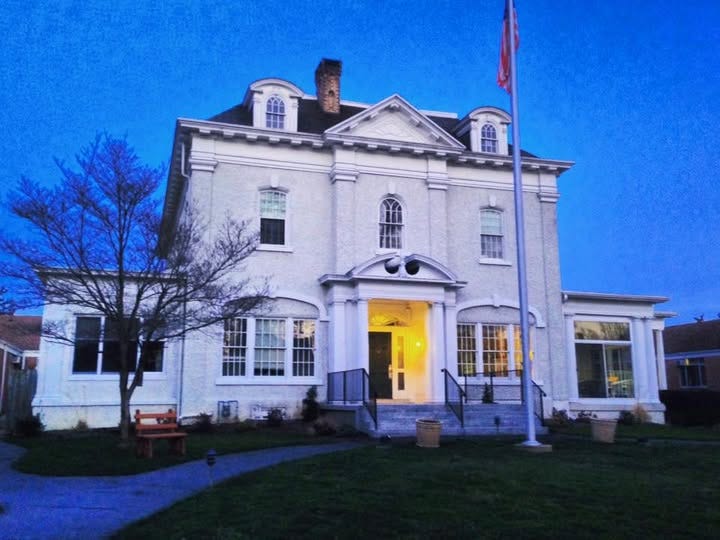
Anyway, I can’t recall the title of the found book I mentioned above —possibly one of my siblings still has it (I hope?)—but it bore the inscription of one Henry B. Hershey, a man of mystery who won second life as simply, “Henry B,” our residential poltergeist.
To Henry B. was attributed every unaccountable noise, misplaced piece of homework, or stray wisp of air that raised goosebumps on our forearms as we climbed the third floor stairs to our attic bedroom beneath the gables.
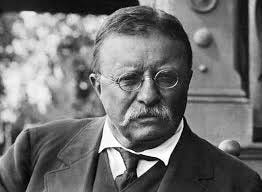
I pictured Henry B. as an innocuous fellow, kinda like Teddy Roosevelt in his waning years, a grandfatherly prankster and household protector rather than any kind of a threat. And if all he ever wanted was a family of his own, he certainly got plenty of ours, since after growing up in that house I ended up raising my own kids in it, as well.
Henry B. got 45 years of me.
I hope he enjoyed it.
Weird Aside (and I’m willing to bet this isn’t something all many others will be able to relate to): The attic bedroom of my childhood later served as the master bedroom I shared with my husband. Not only that, at various times that attic also housed all of my sisters, most of my brothers, some of my children, and for a time, a ping-pong table.
I suppose if I do become a ghost I may be drawn to that attic like Henry B., attached to it as I’ve been. But it’s fine. I’m sure he’s ready for a break by now, anyway.

BUT WHAT DOES ANY OF THIS HAVE TO DO WITH…
Riiiiight. Right, right, right, right, right. My absence from Substack last week. So sorry.
Well, that’s a ghost story, too. A Civil War ghost story—multiple ones, in fact. Why? Because last Sunday, the day of the week I normally sit at home to write my weekly issue of Monday Morning Literary Bric-a-Brac, I was sitting somewhere else:
The Cashtown Inn.
The Cashtown Inn is, well, storied in ghosts, you might say, having served as a field hospital for hundreds of wounded soldiers following the Battle of Gettysburg in July, 1863.
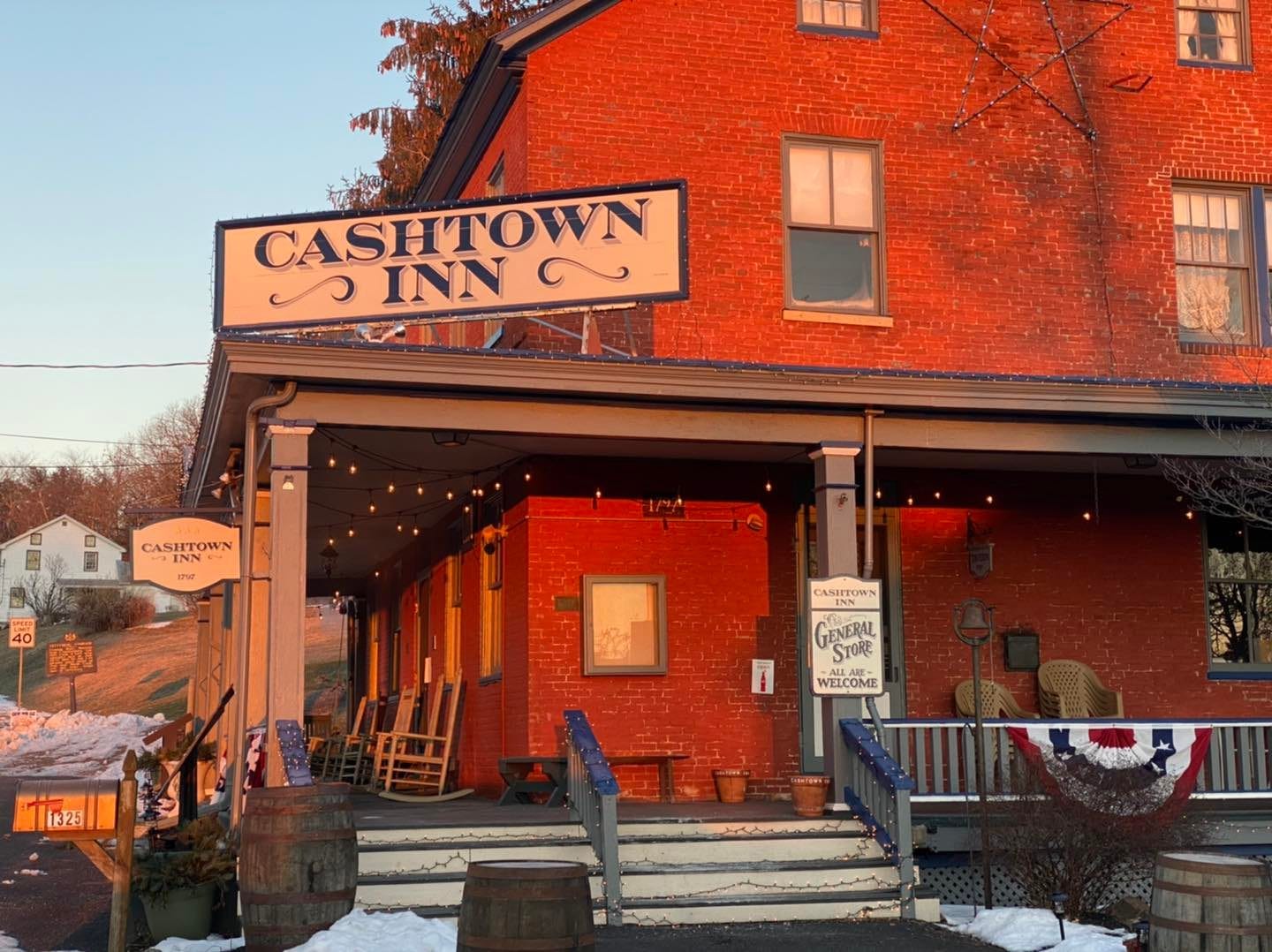
While we’re all celebrating 250 years of America this coming July 4th, many a young man will be commemorating 163 years spent as a ghost at Cashtown.
I visited with some of them two years back when Hubby and I spent a couple of nights at the Inn. We stayed in the General Heth room, one of the original rooms on the second floor that has housed guests since the Inn was built way back in 1797 as a stagecoach stop.
Imagine all the folx who’ve slept in that room before us! If any of them decided to stay on as ghosts, not one made their presence known to us.
Last weekend I returned to the Inn to accompany a friend who’d long wanted to spend a night there, too. I was happy to snag the attic this time, a room dubbed the General Lee Suite, and purportedly one of the most haunted rooms in the Inn.
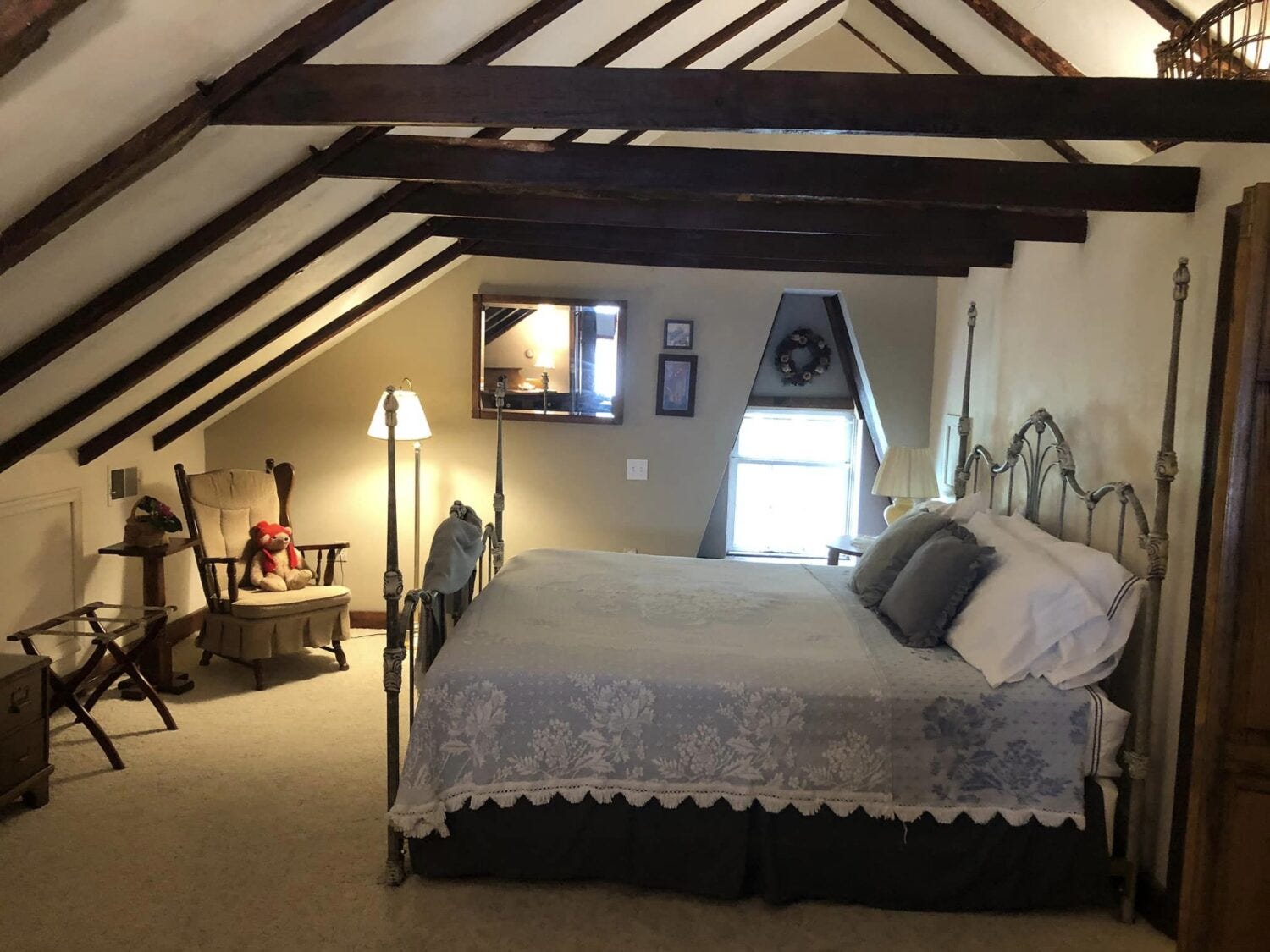
Actor Sam Elliot took up quarters in the attic suite during the filming of Gettysburg, a movie my brother-in-law was an extra in. He came away with a few good ghost stories of his own (perhaps this issue, like ones in the past, calls for a part deux).
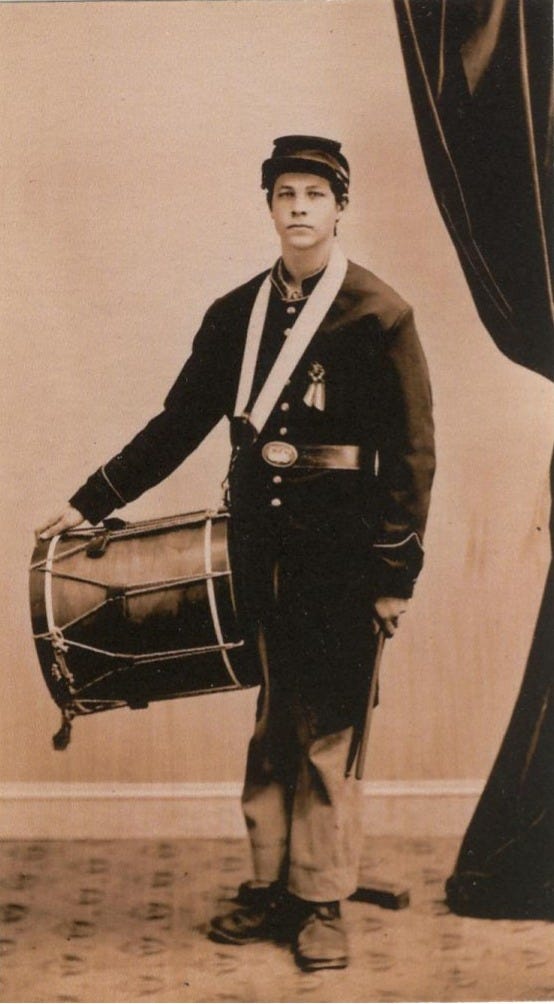
Some years later, when it came time to film the sequel, Gods And Generals, it was my son and I who were cast as extras—him as a drummer boy whose image was left on the cutting room floor but whose drum was not. I saw a shot of it rolling down a hill in the film (it was part of the filming that took place in Staunton, VA).
I understand it was his idea, and the director went with it.
Never mind the more than $500.00 Hubby and I spent having that exact reproduction of a Civil War drum handcrafted for our son (who was deep into reenacting with the 90th PA Infantry Regiment) a few Christmases prior.
I’m still waiting for Ted Turner to reimburse us.
PAYDAY AT CASHTOWN
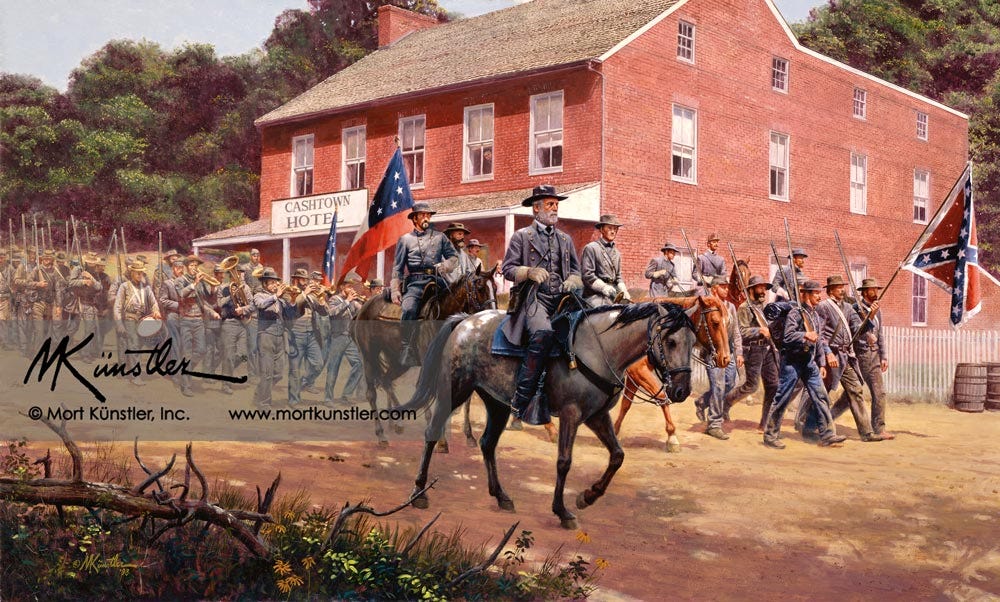
If you’re lucky, part of your stay at The Cashtown Inn might also involve a talk and ghost tour by historian Bruce Kottke. For us he did a first-person impression presentation as former Innkeeper, Jacob Mickley, who as owner of the Inn in 1863 witnessed first-hand the passing of thousands of confederate troops down the Chambersburg Pike (Old Route 30).
We also were taken to the cellar that served as a surgical suite following the battle, Bruce recounting how just outside a basement window a mound of amputated limbs rose ever higher in a gruesome attempt to save wounded soldiers’ lives.
To this day, you’ll find Cashtown still rural, still a bucolic village in Adams County, PA, thanks to the 1948 building of a by-pass along the Lincoln Highway (newer Route 30), which veers to the north of Cashtown at a point a few miles east of it, effectively diverting most traffic headed across southern Pennsyltucky.
So next time you’re in a ghostly mood—even though I can attest to no first-hand encounters there—I recommend you check out The Historic Cashtown Inn for an affordable stay steeped in history.
You’ll get a delicious breakfast included in your stay, and if you visit Wednesday through Saturday, you can enjoy quality evening dining, as well.
Oh, and be sure to tell ’em Riley and Henry B. sent’cha their way!
PS: A GOTHIC ENDNOTE
If you’re thinkin’ now that Dorp House, as pictured on the cover of Alexy, Strong and Silent, bears some faint resemblance to a certain manse I moved in across the street from as an impressionable kid, you ain’t wrong, my dudes and dudettes. What’s more, Audubon Villa and Dorp House both served as schools!
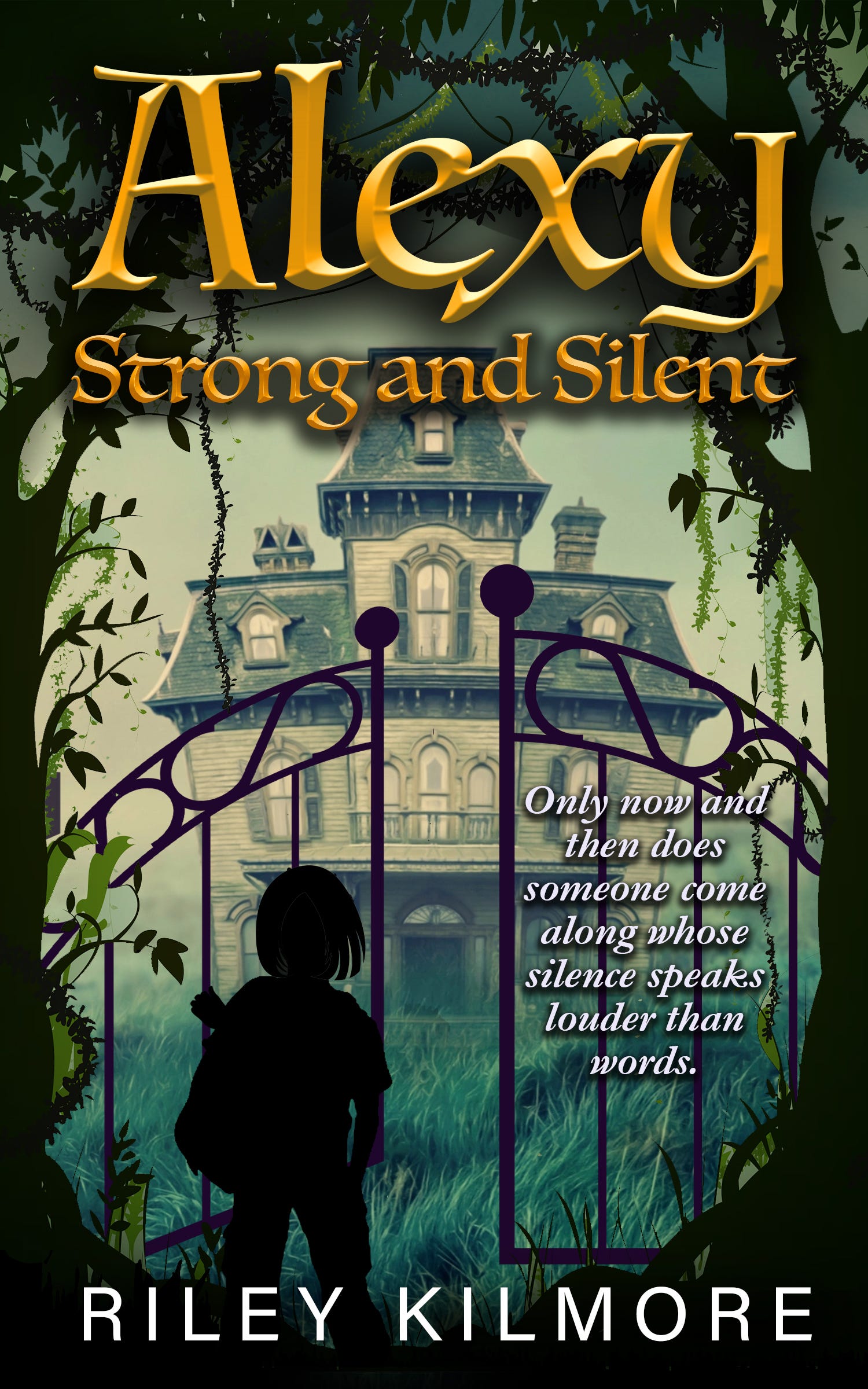
So check out my Oldenshire Series published by Wild Ink Publishing, LLC (available at many fine indie bookstores like Aaron’s Books in Lititz, PA and Whistlestop Bookshop in Carlisle), and next time you find yourself strolling down South Broad Street in Lititz, think of me, Alexy, Henry B. Hershey, and the fine folks at The Cashtown Inn.
Great post! And thanks for reminding me about The Ghost and Mrs. Muir. I used to watch it with my teenage sister-- it was such a cool show, with an edge of longing and unfulfilled romantic tension that was perfect for her and for pre-teen me. I would love to revisit it and will see if it's still available to stream.
Next ghostly stop? Shepherdstown?